
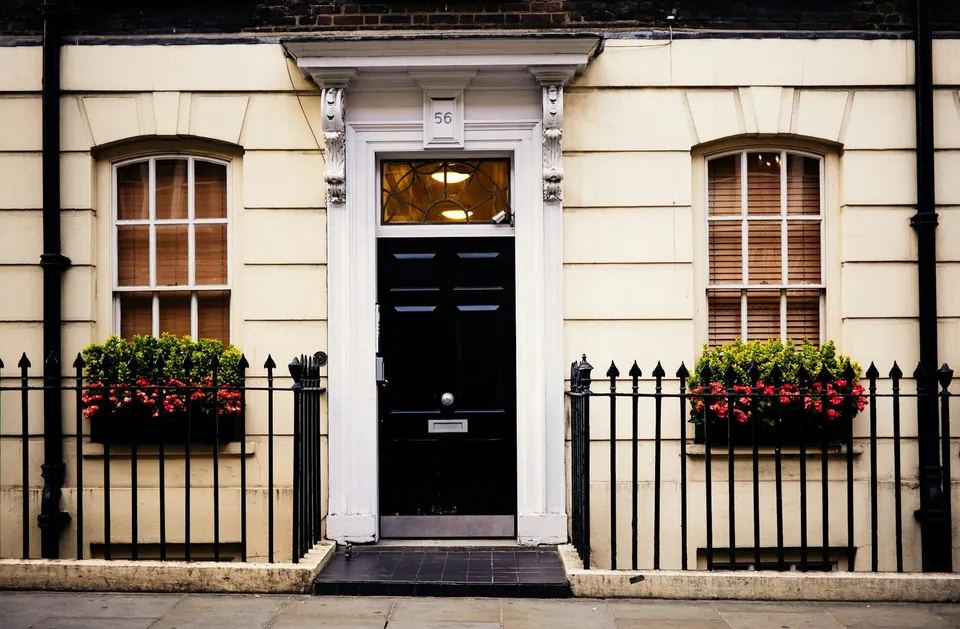
Buying a home in England is open to foreign buyers, and the process follows clear, written steps. The rules differ from many countries, though: types of ownership (freehold / leasehold), the solicitor’s role, the moment the contract becomes binding and Stamp Duty all need to be understood. This guide covers England; some rules differ in Scotland, Wales and Northern Ireland.
Can foreigners buy property in England?
Yes. There is no restriction on foreigners buying residential property in England, and you do not need to live in the UK or hold a visa. If you buy through a foreign company, the company must register on the Register of Overseas Entities at Companies House.
Important: buying a home in England does not by itself give any right of residence or a visa.
Freehold vs leasehold
Freehold is outright ownership of the building and land with no time limit, common for houses. Leasehold is ownership for a fixed term (for example 99 or 125 years); flats are usually sold leasehold. For a leasehold flat, always check:
- Remaining term: how many years are left on the lease.
- Service charge: the yearly cost of maintaining the building and shared areas.
- Ground rent: if any, the yearly sum paid to the freeholder.
The buying process in brief
- Offer: an offer is made to the seller. Even once accepted, neither side is bound yet.
- Solicitor: you instruct an authorised solicitor or conveyancer; under anti-money-laundering rules your identity and source of funds are documented.
- Searches: the title, local-authority searches and the draft contract are reviewed; you can also commission a survey.
- Exchange of contracts: contracts are exchanged, the purchase becomes binding and a deposit is usually paid.
- Completion: the balance is paid and the keys are released.
- Stamp Duty and registration: the Stamp Duty return is due within 14 days of completion; ownership is registered with HM Land Registry.
See our process page for each step in detail.
How much is Stamp Duty (SDLT)?
Stamp Duty Land Tax (SDLT) is paid when buying a home in England and Northern Ireland. It is tiered: each rate applies only to the part of the price within that band. Standard rates:
| Price band | Standard rate |
|---|---|
| Up to £125,000 | 0% |
| £125,001 – £250,000 | 2% |
| £250,001 – £925,000 | 5% |
| £925,001 – £1,500,000 | 10% |
| Above £1,500,000 | 12% |
Two surcharges often apply to international buyers:
- Additional dwellings (+5%): if you will own more than one home after the purchase, 5 points are added to every band. Homes anywhere in the world count towards this.
- Non-UK resident (+2%): if you were not present in the UK for at least 183 days in the 12 months before the purchase, you are non-resident and a further 2 points are added to every band — even if you will live in the home yourself.
Example: a non-UK-resident buyer who already owns a home abroad buys a £400,000 flat. Standard tax £10,000; additional-dwellings surcharge £20,000 (5%); non-resident surcharge £8,000 (2%). Total Stamp Duty: £38,000.
Wales has Land Transaction Tax and Scotland Land and Buildings Transaction Tax instead.
Other costs
- Solicitor / conveyancer fees and search costs.
- HM Land Registry registration fee.
- Survey, if you choose one.
- Mortgage lender and adviser fees, if borrowing.
- Running costs: council tax (homes are placed in bands A to H), for leasehold the service charge and any ground rent, and buildings insurance.
Can foreigners get a mortgage?
Some lenders do lend to buyers living abroad. Terms vary by lender; options for non-residents can be more limited and a larger deposit may be required. Mortgage advice can only be given by FCA-authorised advisers; on request we introduce you to authorised advisers.
What to check in a listing
In England, listings are expected to give the key facts that affect a buyer’s decision (material information). When considering a home, always ask about:
- Tenure (freehold / leasehold) and, if leasehold, the remaining term
- Council tax band
- Service charge and ground rent
- Energy Performance Certificate (EPC) rating
Does buying a home give a visa?
No. Buying a home in England does not by itself give any right of residence or a visa, and the former Tier 1 Investor visa closed to new applicants in 2022. In the UK, immigration advice may only be given by authorised people (IAA-registered advisers or SRA-authorised solicitors). We refer you to authorised advisers.
Sources
- GOV.UK — Stamp Duty Land Tax: Residential property rates
- GOV.UK — Higher rates of Stamp Duty Land Tax
- GOV.UK — Rates of SDLT for non-UK residents
- GOV.UK — Register an overseas entity
This guide is general information, not personal legal, tax or immigration advice. Tax rates can change; confirm the current rates with your solicitor before buying.